

When homeowners begin collecting ideas for a bathroom remodel, many of the inspiration photos look remarkably similar: white tile, white countertops, gray veining, polished fixtures. After seeing the same palette repeatedly, it is easy to assume this is what a new bathroom is supposed to look like.
There is nothing wrong with a crisp white bathroom if it suits you and your home. But white and gray are not the only ways to create a bathroom that is calm, lasting, and easy to live with.
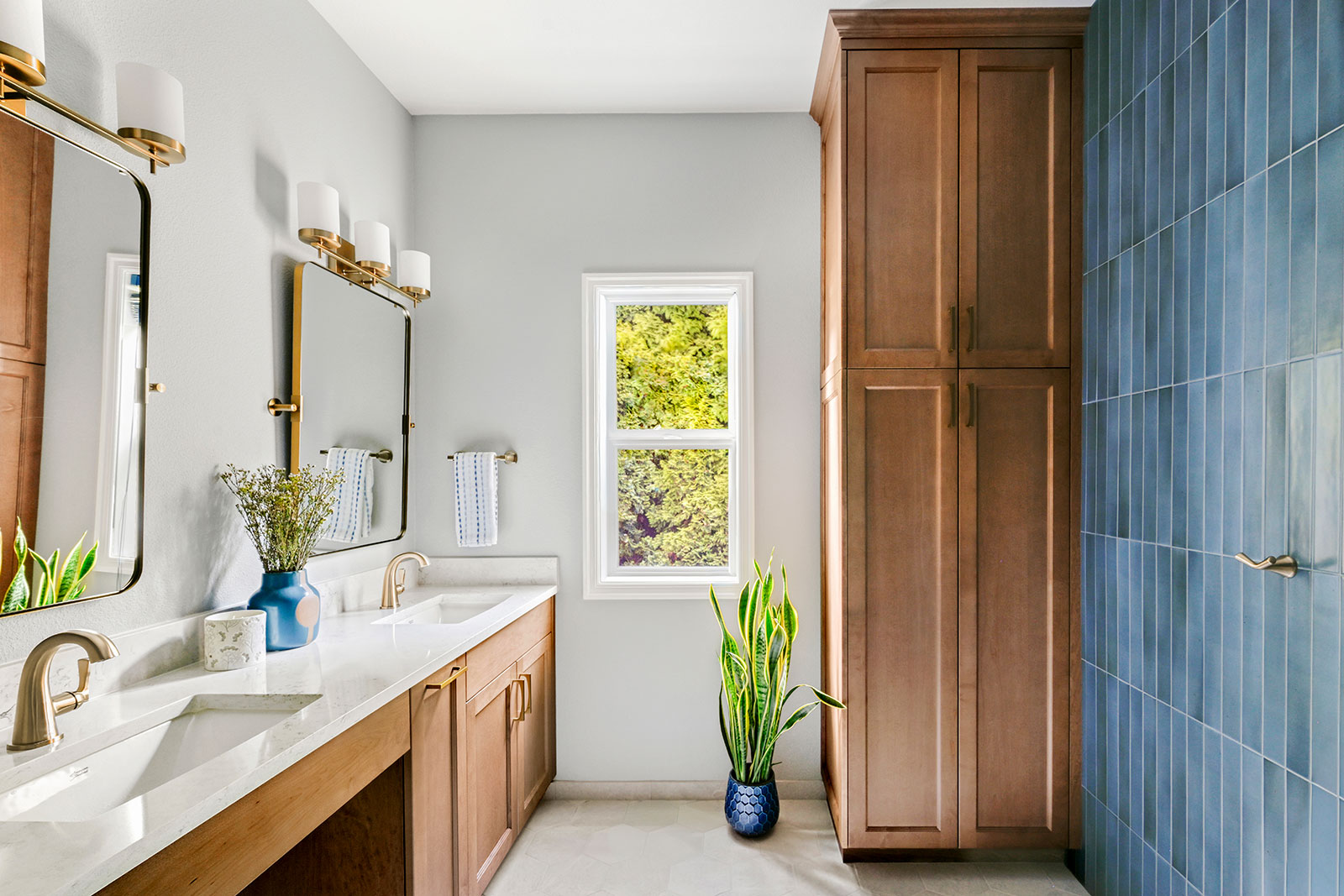
In the Pacific Northwest, there is another source of inspiration much closer to home. Wood, stone, mossy greens, muted blues, warmer neutrals, textured surfaces, and natural light can create a bathroom that connects more closely to the landscape outside and brings more warmth inside during our long stretches of gray weather. These elements can feel every bit as calm and lasting as a white or gray palette, while giving the room more depth and character.
The opportunity is not to decorate a bathroom around a Pacific Northwest theme. It is to consider what makes this region appealing in the first place, then use color, material, texture, and light to create a room that belongs in your home.
White and Gray Are Not the Only "Safe" Choices
One reason homeowners gravitate toward white and gray is the fear of making a decision they will regret. Neutral seems safer. Color can seem like a commitment.
But neutral is broader than white.
A warm taupe or greige, a blend of gray and beige, can provide the same flexibility while bringing more warmth to the room. Muted greens and blues can function as neutrals rather than accent colors. Wood introduces another layer without requiring a strong color statement at all.
The difference becomes especially noticeable in Oregon, where daylight changes considerably throughout the year. A bright white room photographed on a sunny afternoon can read very differently through months of overcast skies. If the goal is a bathroom that is comfortable and calming, it is worth considering how the palette will respond to the light you actually live with.
Working with color also does not mean choosing something trendy. A well-developed palette can have depth without being loud. The key is how colors relate to one another, to the materials in the room, and to the rest of the house.
This is where homeowners can miss an opportunity by equating "safe" with "least amount of color." Sometimes the more lasting choice is the one with enough variation, texture, and warmth to give the room character.
Materials Bring Warmth That Paint Alone Cannot
Color is only one part of the equation. Much of what makes a bathroom inviting comes from what the room is made of.
Wood vanities and shelving can introduce warmth directly. Natural stone can bring subtle movement and variation to a countertop or tile surface. Large-format tile can reduce the number of grout lines and let the character of a stone-look material become more apparent. Handmade and artisan tiles can introduce irregularity and texture in smaller areas.
Materials do not always need to be natural to accomplish the same design goal. Porcelain tile that resembles wood or limestone can provide a similar appearance and texture while offering the durability and easier maintenance that often make sense in a bathroom.
The point is not to fill the bathroom with as many earthy materials as possible. It is to choose a few that work together.
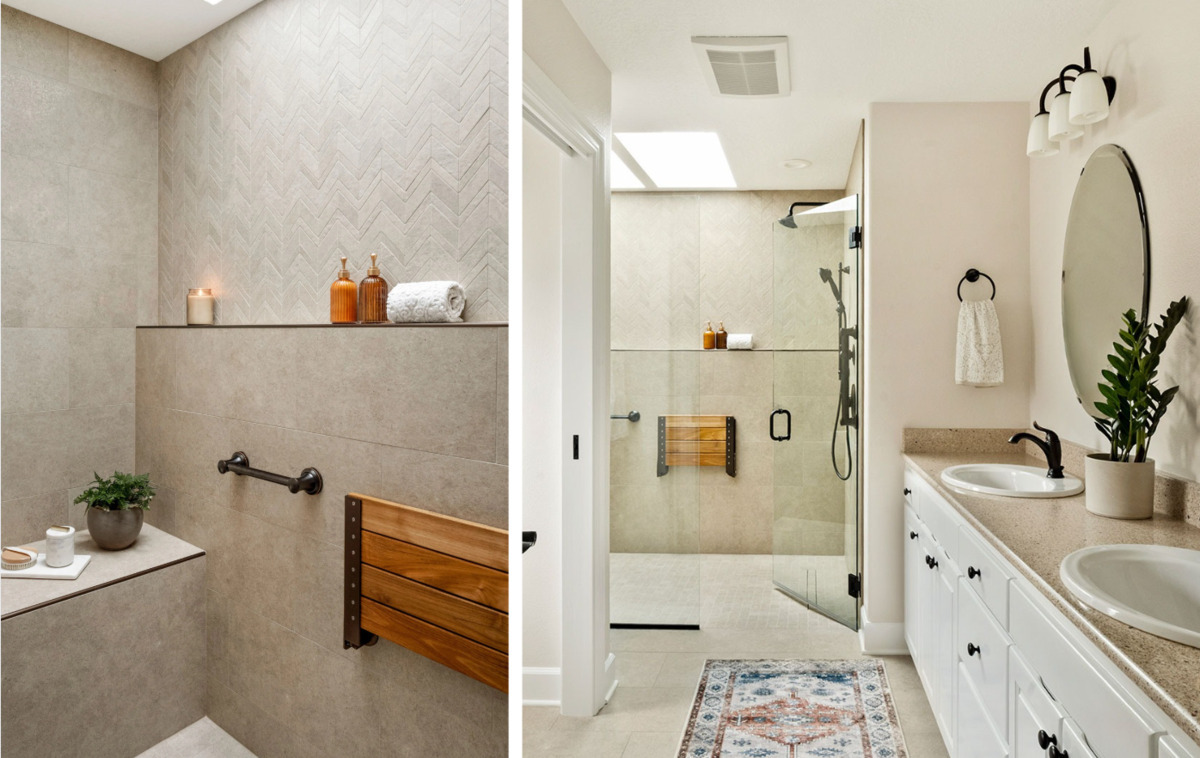
A good example is the West Salem Primary Bathroom Remodel. The homeowners wanted to keep their existing vanity and countertop, so the new design needed to relate to those elements rather than starting over with an unrelated palette.
The bathroom also needed to be accessible, including wider doorways and a zero-threshold shower. Accessibility could have pushed the room toward an institutional appearance if those requirements had been considered separately from the design.
Instead, a warm limestone-look tile connects the new surfaces with the existing vanity and countertop. Within the shower, the same tile line appears in different sizes, shapes, and layouts, creating variation without introducing competing materials. Oil-rubbed bronze fixtures add another warm element. The overall palette is still neutral, but the variation in tone, texture, and material keeps it from feeling flat. It feels warm and interesting without relying on anything overly trendy, which is exactly what can make a neutral bathroom feel lasting.
The result demonstrates an important point about accessible design: function does not have to announce itself. A bathroom can accommodate long-term needs while still looking warm, comfortable, and connected to the rest of the home.
Pacific Northwest Design Is Also About Light and Texture
The term biophilic design is sometimes reduced to adding plants to a room. Yet its possibilities are much broader. Material, texture, pattern, light, and a visual relationship to the outdoors can all strengthen our connection to nature.
In a bathroom, that might mean a wood vanity, pebble tile underfoot, stone or stone-look surfaces, or tile with floral and organic patterns. It might also come from the shapes and lines within the room. Not everything needs to follow a rigid grid. A flowing tile pattern or textured surface can introduce some of the irregularity we experience outdoors.
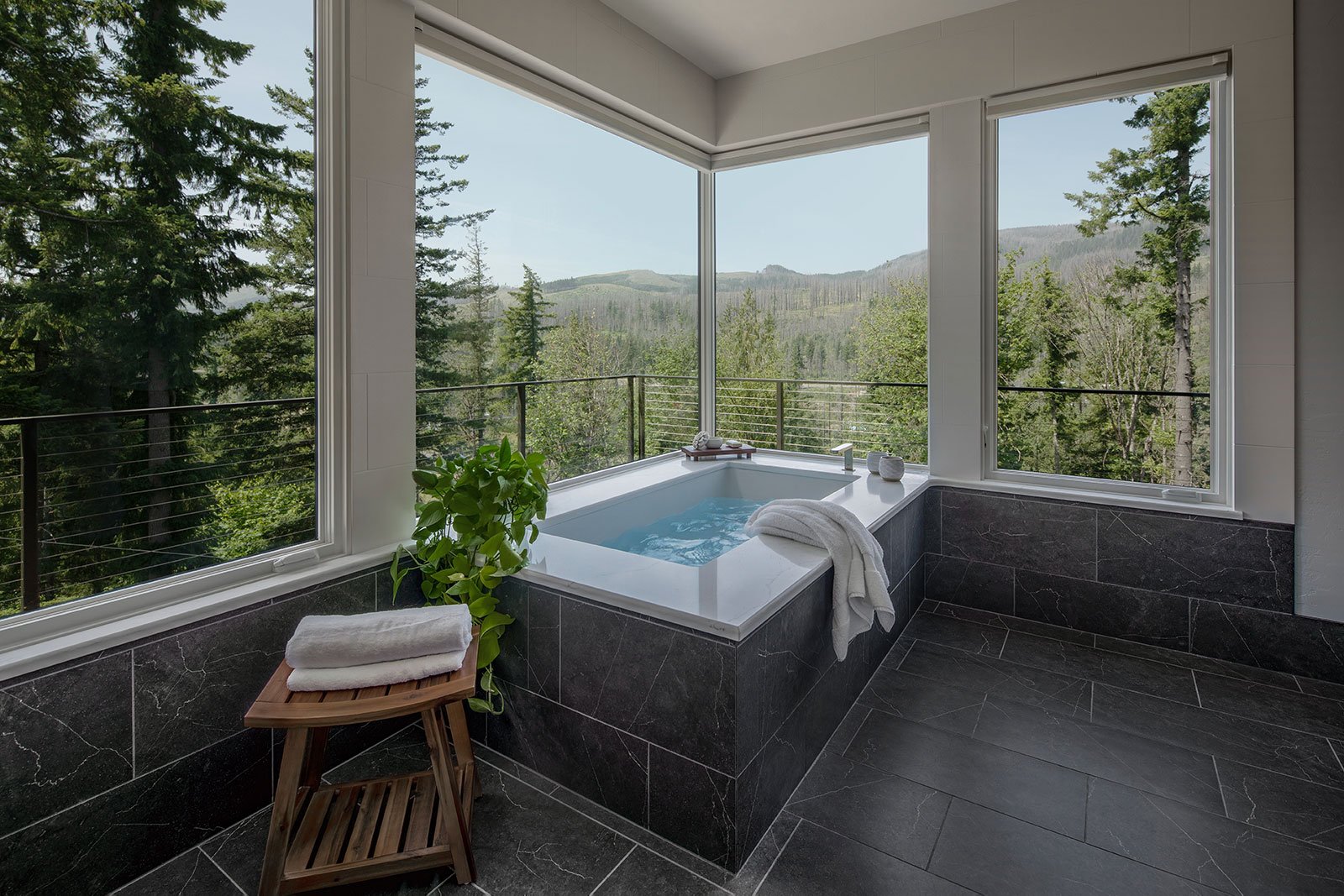
Windows and skylights can make an even larger difference when the architecture allows for them. Natural light changes throughout the day and across the seasons, giving materials a quality that artificial lighting cannot completely reproduce.
It also changes the experience of the room itself. Daylight and a visual connection to the outdoors can make a bathroom feel more grounded and integrated with its surroundings, rather than like an enclosed space lit entirely from within.
When additional daylight is not possible, lighting selection becomes more important. Warmer color temperatures can keep a bathroom from appearing harsh, particularly at night. Warm-dim fixtures go a step further by shifting toward warmer light as they are dimmed, more closely following the change in sunlight toward the end of the day.
The larger lesson is that connection to the outdoors does not depend on one obvious design feature. It comes from several decisions working together.
How Design Decisions Can Build on One Another
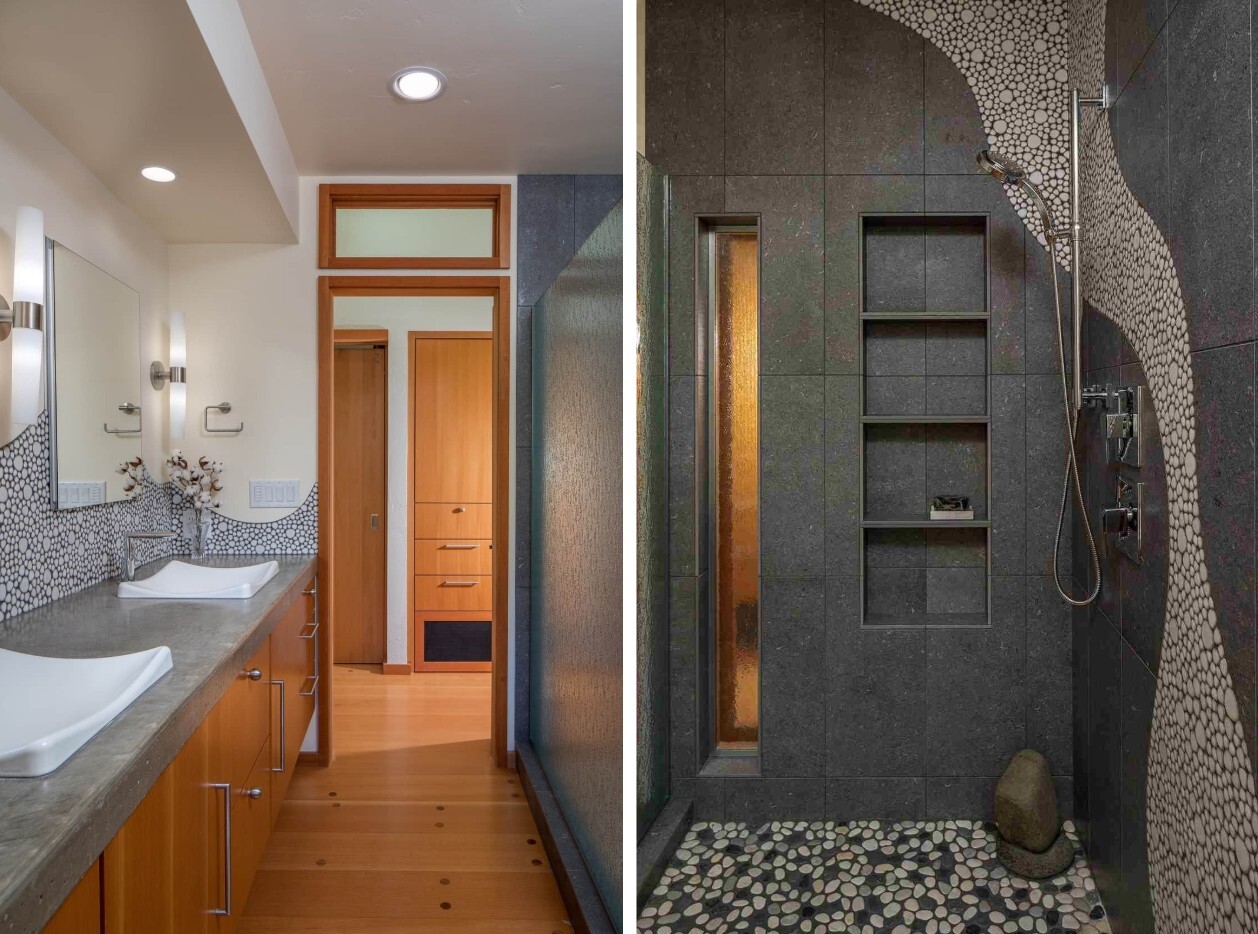
Our Eugene Bathroom Remodel takes a different approach from the West Salem project, but it demonstrates the same principle.
Pebble tile introduces an irregular surface and organic shape. Natural wood provides warmth, while the concrete countertop adds another material with its own texture and variation. Rain glass at the shower enclosure has a textured surface reminiscent of water moving down a window.
Light is part of the composition as well. A transom window above the bathroom door and a vertical relite window in the shower bring additional daylight into the room, an example of how natural light can sometimes be borrowed from an adjoining space when a larger exterior window is not the right solution.
No single element is responsible for the character of this bathroom. That is precisely why it works. Wood, pebble tile, concrete, textured glass, daylight, and the arrangement of the room support one another without turning the space into a literal interpretation of nature.
Start With a Place You Already Know
If you are unsure what a warmer Pacific Northwest bathroom means for your own home, you do not need to begin with a design trend.
Think instead about an outdoor place where you are comfortable. It could be a campground you return to each year, a waterfall along a favorite hike, a forest trail, or a stretch of the Oregon coast.
Then pay attention to what is actually there.
Perhaps it is the muted green of moss against dark bark. It might be the warm gray and tan variation in river stone, the texture of weathered wood, the movement of water, or the way filtered daylight changes a surface.
You do not need to reproduce that place in your bathroom. Rather, use it to understand the combinations of color and texture you respond to, then consider how those qualities could inform the materials, finishes, and lighting you choose.
You also don't need to know exactly how to translate that inspiration into a finished room. A designer can help identify what you're responding to, then bring those colors, textures, and materials together in a way that feels cohesive and appropriate for your home. The goal isn't for you to arrive with all the answers. It's to give the design team a meaningful starting point to work from.
A bathroom is one of the first rooms you use in the morning and one of the last you use at night. It should work well for those routines, but it can do more than that. When its materials, light, and colors relate to the home and the landscape around it, the room is less likely to look like an inspiration photo transplanted from somewhere else.
That is a better definition of Pacific Northwest bathroom design: not a prescribed style, but a room that makes sense for the people who live there and the place they chose to call home.
Next Steps
Learn more: Download our eBook — Remodeling Guide: How To Enhance Your Home to Improve Daily Living.

Ready to begin? Request your Complimentary Home Remodel Consultation and take the first step toward a home that grows gracefully with you.
