

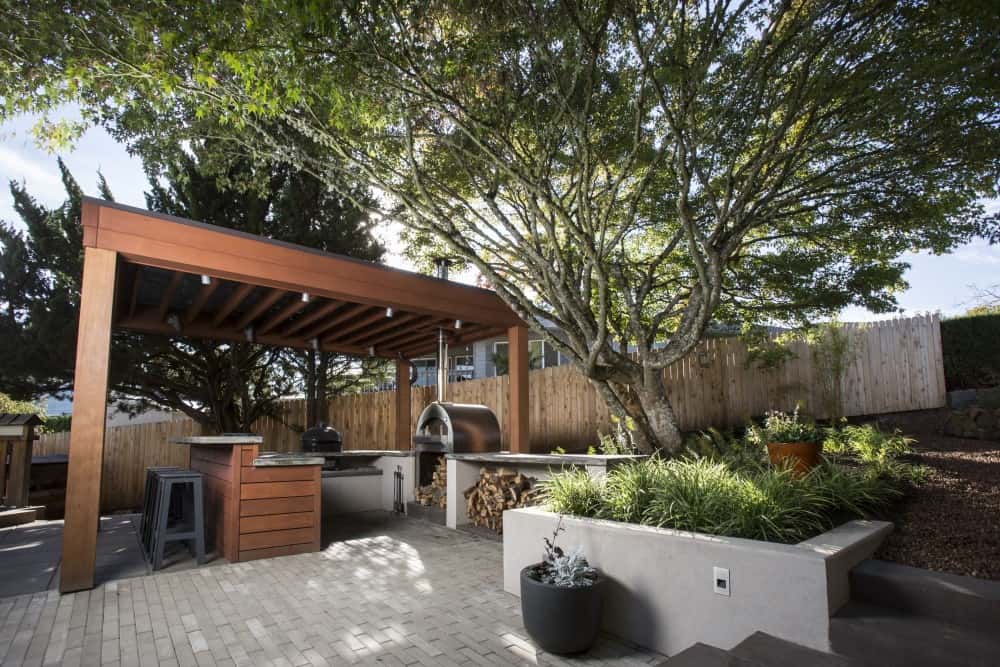
You love being outside.
Perhaps you spend weekends in the garden. You enjoy entertaining outdoors. Or maybe you simply crave fresh air after a long day inside.
Yet even with all that potential, your outdoor living space doesn’t get used the way you imagined.
The patio feels disconnected from the house. There’s nowhere truly comfortable to sit for long. Cooking outside requires too many trips back inside. And with Oregon’s shifting seasons — warm afternoons, cool evenings, stretches of rain — you find yourself using the space only a few months out of the year.
There’s a meaningful difference between having a backyard and truly enjoying outdoor living.
That difference almost always comes down to thoughtful design.
Where Outdoor Living Begins: Connection to the Home
The outdoor living spaces you use most are rarely the ones at the far edge of your property. They’re the ones directly connected to your home.
When a covered porch sits just off the kitchen, dinner naturally drifts outside. When large glass doors open wide from the living room to a patio, the boundary between indoors and outdoors softens. Even the simple ability to see your outdoor space from inside changes how often you use it.
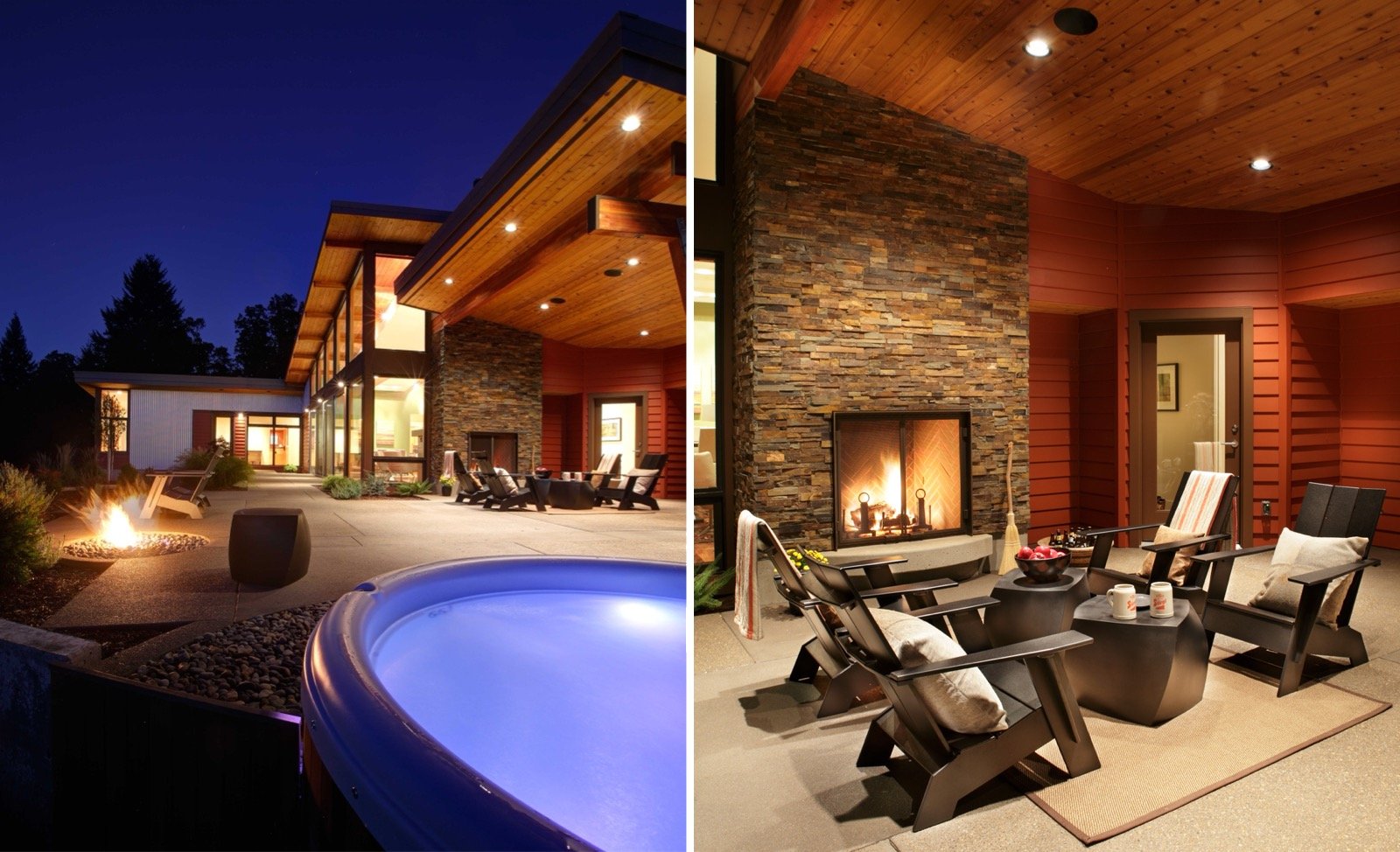
We’ve seen this transformation firsthand. In one mid-century home surrounded by trees, the setting was beautiful — but the patio felt like an afterthought. The homeowners loved their architecture and wooded landscape, yet they rarely stepped outside.
The redesign didn’t start with furniture. It started with intention.
Doors were widened. Covered elements provided shelter from Oregon rain. Materials were selected to complement the home’s character. Landscaping framed views and created privacy without blocking light.
What emerged wasn’t simply a patio renovation. It became an outdoor sanctuary — a place where morning coffee felt intentional and evenings lingered naturally.
When an outdoor living space feels integrated, it stops being an “extra” area and becomes part of daily life.
Function Creates Freedom
Many outdoor areas underperform because they lack purpose.
A large expanse of concrete might look impressive, but without definition, it rarely supports real living. Contrast that with an outdoor space intentionally organized around how you spend time.
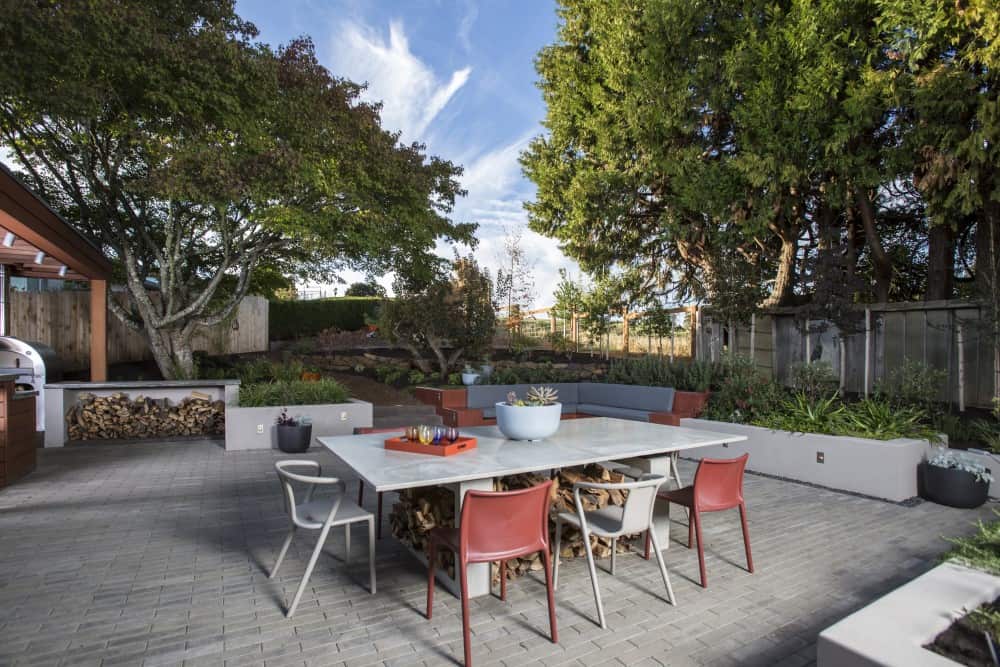
Imagine stepping outside and knowing exactly where you’ll sit for a quiet moment. Where guests will gather during a party. Where you’ll prep vegetables from your garden before grilling dinner. Even a small gardening shed or workspace can signal that this yard supports your hobbies, not just your view.
When spaces are defined — a dining area here, a lounge area there, a quiet corner tucked near greenery — you naturally use them more often. Clarity invites activity. The yard begins to feel like a collection of outdoor rooms rather than one undefined surface.
That clarity removes friction. And when friction disappears, enjoyment increases.
Outdoor Cooking Should Feel Effortless
One of the quickest ways to abandon outdoor living is inconvenience.
If cooking outside means carrying dishes, tools, and ingredients back and forth repeatedly, it will remain an occasional novelty.
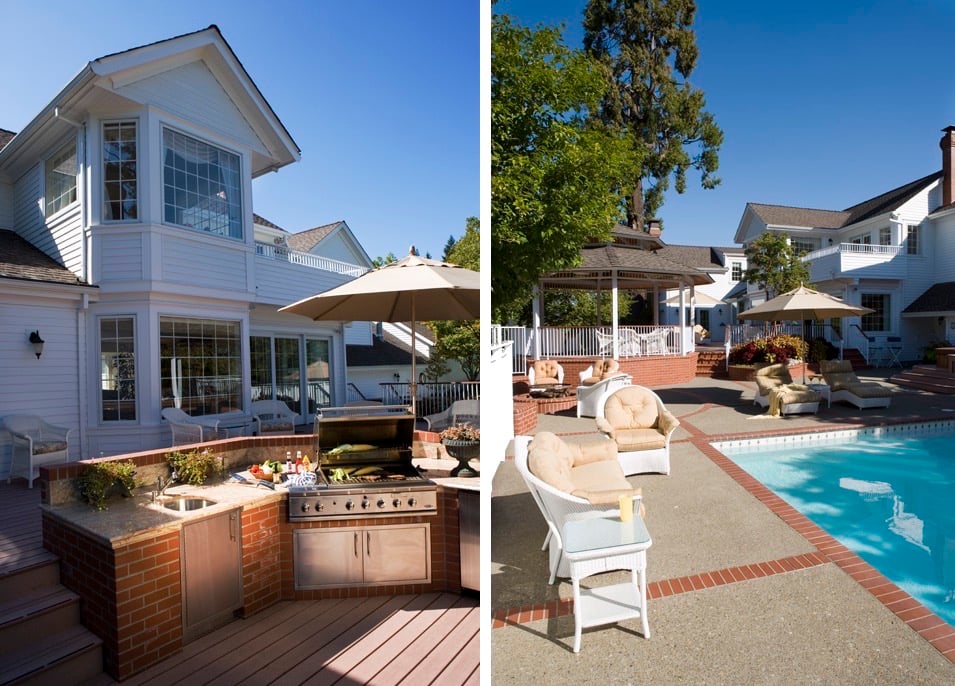
But when an outdoor cooking area is designed with intention — counter space for prep, storage for utensils, a prep sink for cleanup, proper lighting for evenings, and thoughtful proximity to the indoor kitchen — something shifts.
Weeknight dinners begin to move outside. Hosting feels fluid. Conversations continue while food is prepared rather than breaking apart.
It’s not about creating an elaborate outdoor kitchen for show. It’s about designing a space that works as well outside as your kitchen does inside.
Comfort Extends the Seasons
In Oregon, an outdoor living space must account for variability. Sun, wind, cool mornings, and gentle rain are all part of the rhythm of the year.
When comfort is ignored, usage becomes seasonal. When comfort is designed in, the space becomes resilient.
Covered porches and pergolas offer protection without enclosure. Wind protection makes seating usable. Outdoor-rated lighting extends evenings. Ceiling fans and heaters stretch the shoulder seasons. Durable materials withstand moisture and temperature changes.
But comfort does more than extend months of use.
It changes how you feel.
There’s something grounding about sitting beneath a covered patio while rain falls softly nearby. Something restorative about breathing cool evening air after a warm day. Something clarifying about stepping outside and feeling the space welcome you rather than resist you.
Outdoor living supports mental clarity as much as physical comfort. For homeowners who value connection to nature, that shift is powerful.
More Than Square Footage — A Different Way to Live
When thoughtfully designed, outdoor living spaces function as real living space.
They become the second dining room during summer. They host book club. They give children a place to play while adults relax nearby. They offer a morning retreat that feels entirely separate from the demands of the house.
While adding interior square footage has its place, outdoor living often provides valuable usable space at a lower investment — with benefits an enclosed addition cannot replicate.
Fresh air. Changing light. Seasonal movement. The subtle sounds of the outdoors.
These are not decorative details. They are part of what makes a home feel alive.
Designing with the Landscape, Not Just On It
Outdoor living is not simply about installing hard surfaces. It is about shaping how you live.
Landscaping becomes essential here. Strategic plantings create privacy or openness. Views can be framed intentionally. Native and pollinator-friendly plants invite birds and beneficial wildlife. Fire features create warmth and gathering points. Water features introduce calming sound.
In Oregon especially, where greenery surrounds us much of the year, outdoor living should feel like an extension of the landscape itself — not an island placed on top of it.
When design respects the environment around it, the space feels immersive rather than constructed.
The Question That Matters Most
The most successful outdoor living spaces reflect real habits.
Do you prefer intimate evenings or larger gatherings?
Do you want a quiet retreat or a lively entertaining area?
What hobbies could your yard better support?
How often would you cook outside if it were easier?
When your outdoor living space aligns with how you truly live, you use it consistently and with intention.
And over time, something subtle but meaningful happens.
Morning coffee becomes a ritual instead of a rushed habit.
Weeknight dinners drift outdoors.
Hosting feels relaxed.
Your home feels more expansive.
Time outside becomes part of your routine.
Not because you force it — but because the space finally supports it.
Ready to Rethink Your Outdoor Living Space?
Improving outdoor living isn’t about adding more features. It’s about designing with purpose.
If you’re in the early stages of thinking about remodeling your home, download our free guide: From Outdated to Outstanding: A Remodeling Guide to Help You Fall Back in Love with Your Home
Explore how thoughtful design transforms the way you live — inside and out.
If you’re ready to discuss how your porch, patio, or outdoor living space could better support your lifestyle, schedule a Home Remodel Discovery Call. Let’s talk about your ideas and explore what’s possible.
A Final Thought
If your outdoor living space were intentionally designed to support your daily life in every Oregon season, how often would you choose to step outside? And what might change if your home restored you as much as it sheltered you?